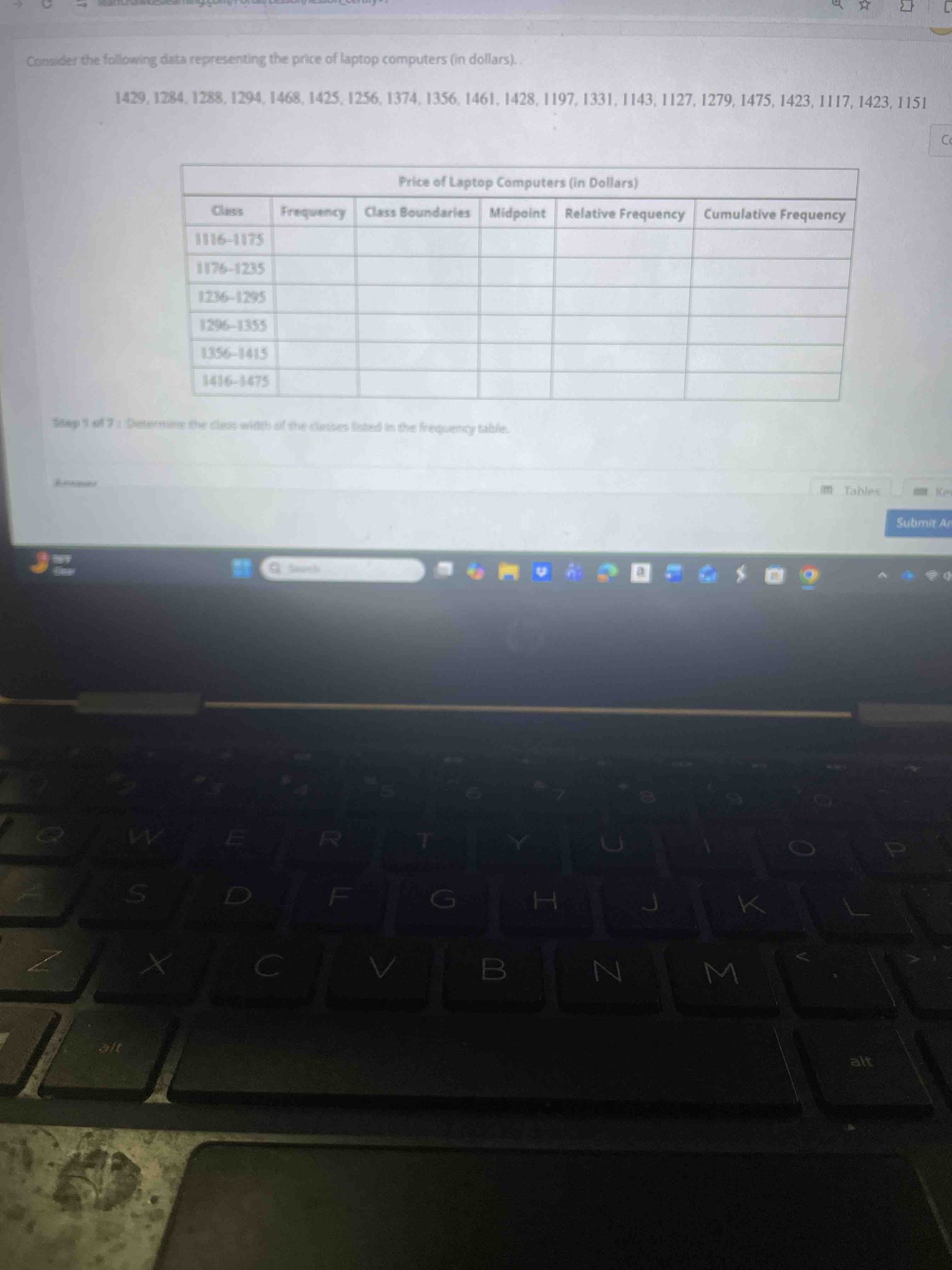
Consider the following data representing the price of laptop computers (in dollars). 1429, 1284, 1288, 1294, 1468, 1425, 1256, 1374, 1356, 1461, 1428, 1197, 1331, 1143, 1127, 1279, 1475, 1423, 1117, 1423, 1151. Step 1 of 7: Determine the class width of the classes listed in the frequency table. The classes provided are: 1116-1175, 1176-1235, 1236-1295, 1296-1355, 1356-1415, 1416-1475.
Answer
To determine the class width for a frequency distribution, you subtract the lower class limit of one class from the lower class limit of the next consecutive class. Looking at the first two classes: 1. The lower limit of the first class is 1116. 2. The lower limit of the second class is 1176. Calculation: 1176 - 1116 = 60. Alternatively, you can use the upper limits: 1235 - 1175 = 60. You can also calculate it as the range of values in a single class plus one (since the limits are inclusive): (1175 - 1116) + 1 = 59 + 1 = 60. Therefore, the class width is 60.