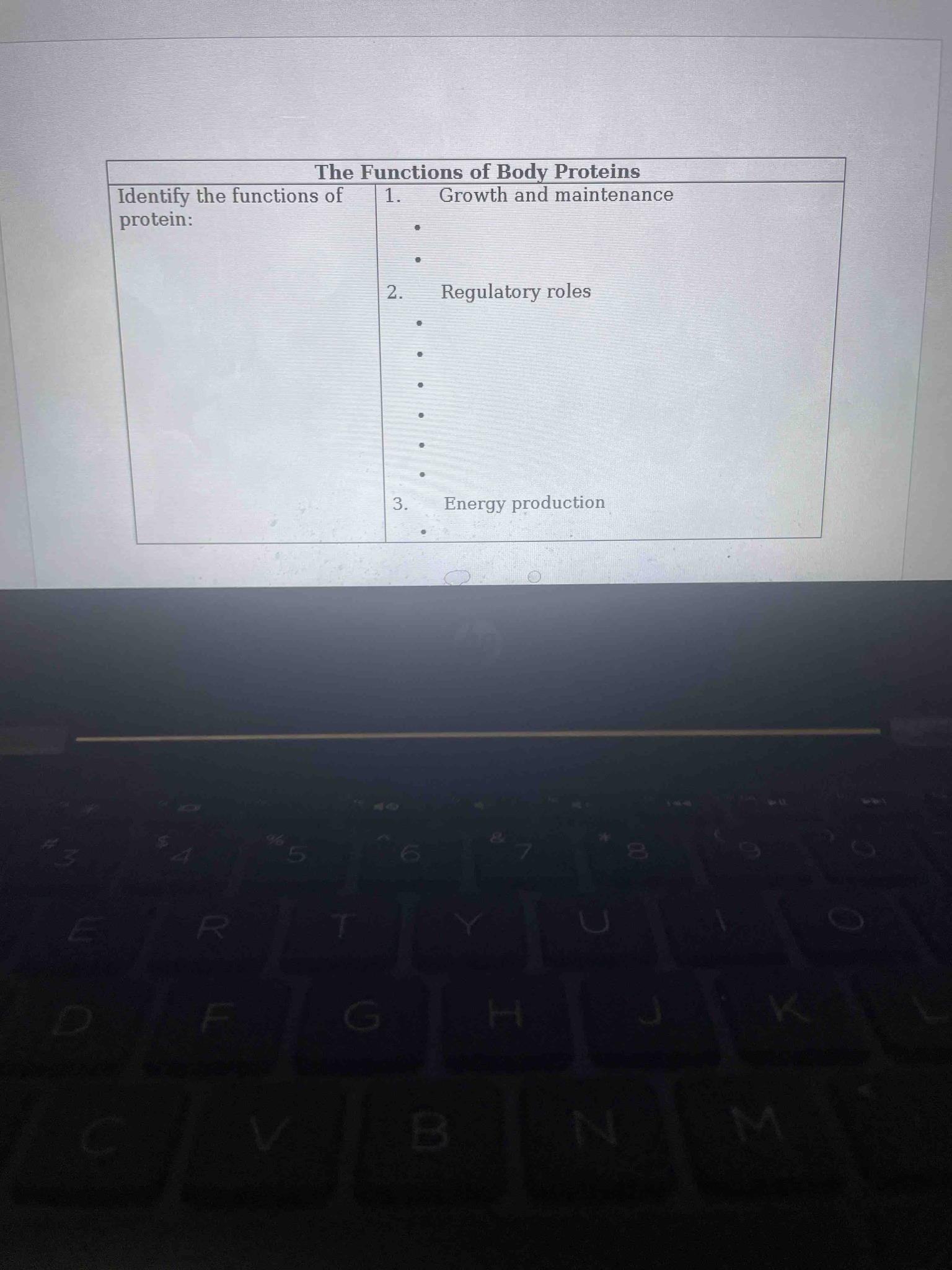
The Functions of Body Proteins: Identify the functions of protein based on the following three main categories: 1. Growth and maintenance, 2. Regulatory roles, 3. Energy production.
Answer
Proteins are essential macromolecules that perform a variety of vital functions in the human body. 1. Growth and maintenance: Proteins act as the building blocks for tissues. They are necessary for the development of new tissues (growth) and for repairing damaged cells or replacing old ones (maintenance), such as in skin, muscles, and internal organs. 2. Regulatory roles: Proteins regulate numerous physiological processes. This category includes: - Enzymes: Act as catalysts to speed up chemical reactions. - Hormones: Act as chemical messengers (e.g., insulin) to coordinate body activities. - Fluid balance: Help maintain the correct amount of water in blood and tissues. - Acid-base balance: Act as buffers to keep the blood pH within a narrow range. - Transport: Carry substances like oxygen (hemoglobin) and lipids throughout the body. - Antibodies: Support the immune system by identifying and neutralizing foreign invaders like bacteria and viruses. 3. Energy production: While the body prefers to use carbohydrates and fats for fuel, proteins can be broken down to provide energy (approximately 4 calories per gram) if primary energy sources are insufficient or during periods of prolonged starvation.