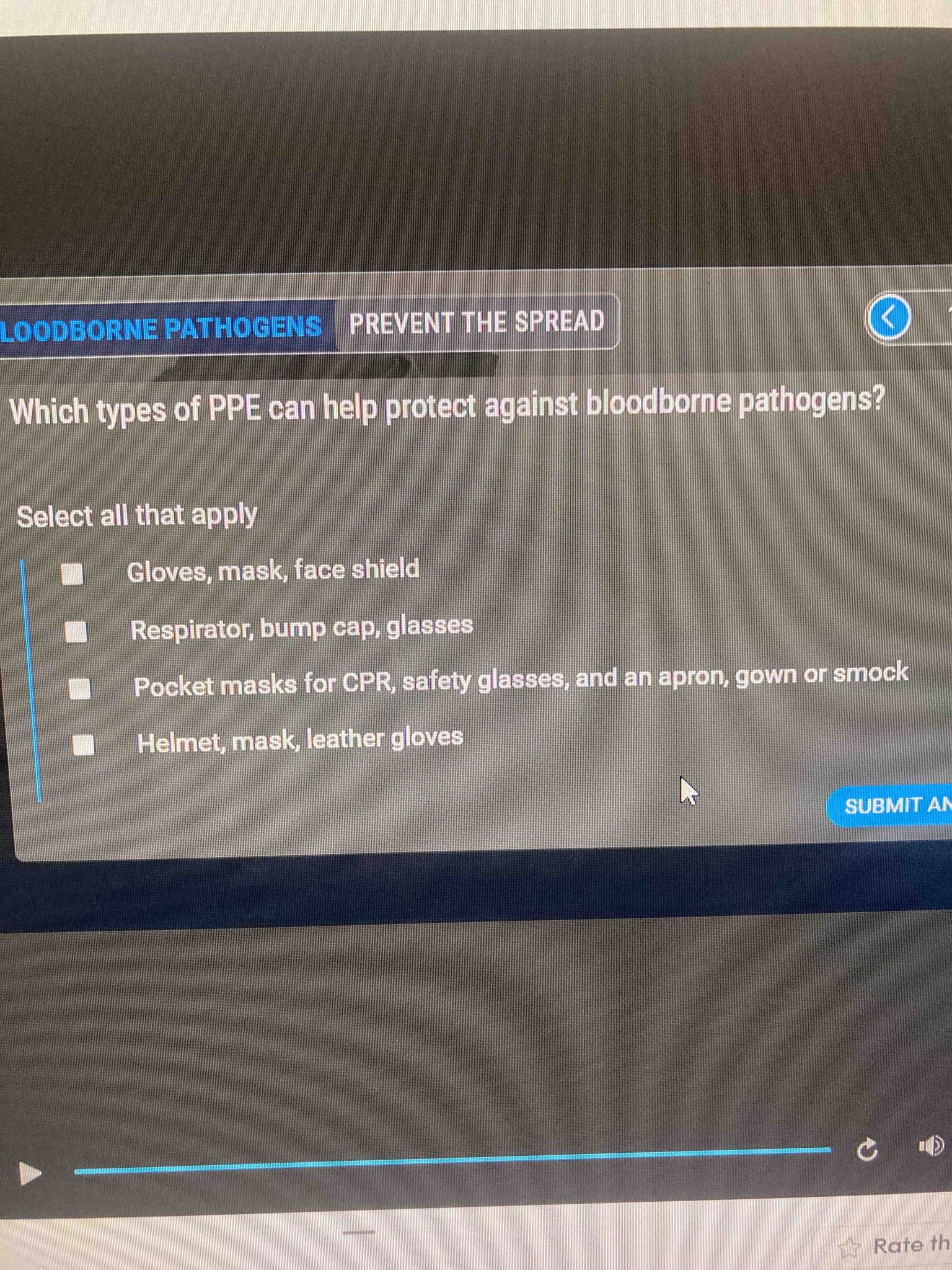
Which types of PPE can help protect against bloodborne pathogens? Select all that apply
Answer
Personal Protective Equipment (PPE) used against bloodborne pathogens must be appropriate, meaning it does not permit blood or other potentially infectious materials to pass through to or reach the employee's clothes, undergarments, skin, eyes, mouth, or other mucous membranes under normal conditions of use and for the duration of the time the protective equipment will be used. Examining the options: 1) 'Gloves, mask, face shield' provide protection for hands, nose, mouth, and eyes against splashes or sprays of blood. 2) 'Pocket masks for CPR, safety glasses, and an apron, gown or smock' provide protection for mucous membranes, eyes, and clothing/skin from splashes during CPR and medical procedures. The other options include non-protective items like bump caps and leather gloves, which are meant for impact or general work rather than biological fluid barrier protection. Therefore, the correct selections are 'Gloves, mask, face shield' and 'Pocket masks for CPR, safety glasses, and an apron, gown or smock'.