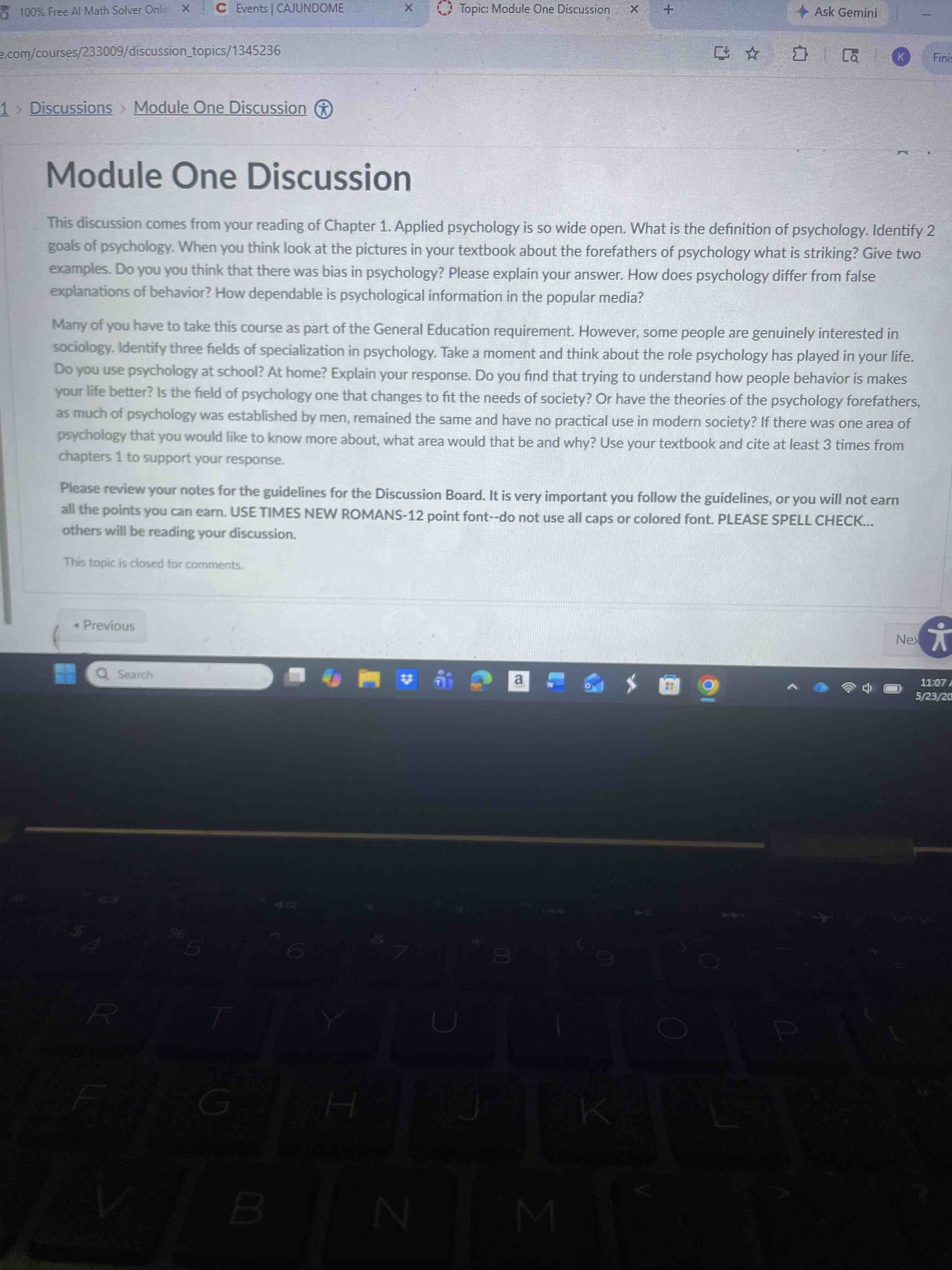
The image contains an online discussion board prompt for 'Module One Discussion' in a psychology course. The core questions are: 1. What is the definition of psychology? 2. Identify 2 goals of psychology. 3. When you look at pictures of the forefathers of psychology, what is striking? Give two examples. 4. Do you think there was bias in psychology? Explain. 5. How does psychology differ from false explanations of behavior? 6. How dependable is psychological information in popular media? 7. Identify three fields of specialization in psychology. 8. Reflect on the role of psychology in your life (school, home), and whether trying to understand behavior makes life better. 9. Does the field of psychology change to fit the needs of society, or are the theories of the forefathers fixed and impractical for modern use? 10. What area of psychology would you like to know more about and why?
Answer
This response addresses all prompts based on standard introductory psychological concepts. 1. Definition: Psychology is the scientific study of the mind and behavior. It encompasses the biological influences, social pressures, and environmental factors that affect how people think, act, and feel. 2. Two Goals: Two primary goals of psychology are to 'describe' behavior (observing a behavior and noting everything about it) and 'predict' behavior (determining when a specific behavior will happen in the future). 3. Forefathers: What is striking about early psychology forefathers is the lack of diversity. Two examples are Wilhelm Wundt (founder of experimental psychology) and Sigmund Freud (founder of psychoanalysis); both were white European males. 4. Bias: Yes, early psychology was heavily biased toward a Western, male-centric perspective, often called 'androcentrism.' This meant that the experiences of women and non-Western cultures were often marginalized or pathologized. 5. Psychology vs. False Explanations: Psychology relies on the scientific method, empirical evidence, and peer review. False explanations (pseudopsychologies like astrology or palmistry) rely on anecdotes, 'common sense,' or untestable claims. 6. Popular Media: Information in popular media is often oversimplified or sensationalized ('pop psychology'). It should be viewed with skepticism unless backed by peer-reviewed research. 7. Specializations: Three fields include Clinical Psychology (treating mental illness), Industrial-Organizational Psychology (behavior in the workplace), and Developmental Psychology (study of change over the lifespan). 8. Personal Reflection: Using psychology at home or work involves using active listening or understanding motivation. Understanding behavior generally makes life better by fostering empathy and better communication. 9. Evolution of the Field: Psychology is dynamic and evolves to fit modern society. While forefathers provided a foundation, modern psychology has pivoted towards cultural inclusivity and Neuroscience, moving away from outdated or impractical theories. 10. Interest: An area of interest might be Neuropsychology, as it bridges the gap between physical brain structures and complex cognitive functions like memory and personality.