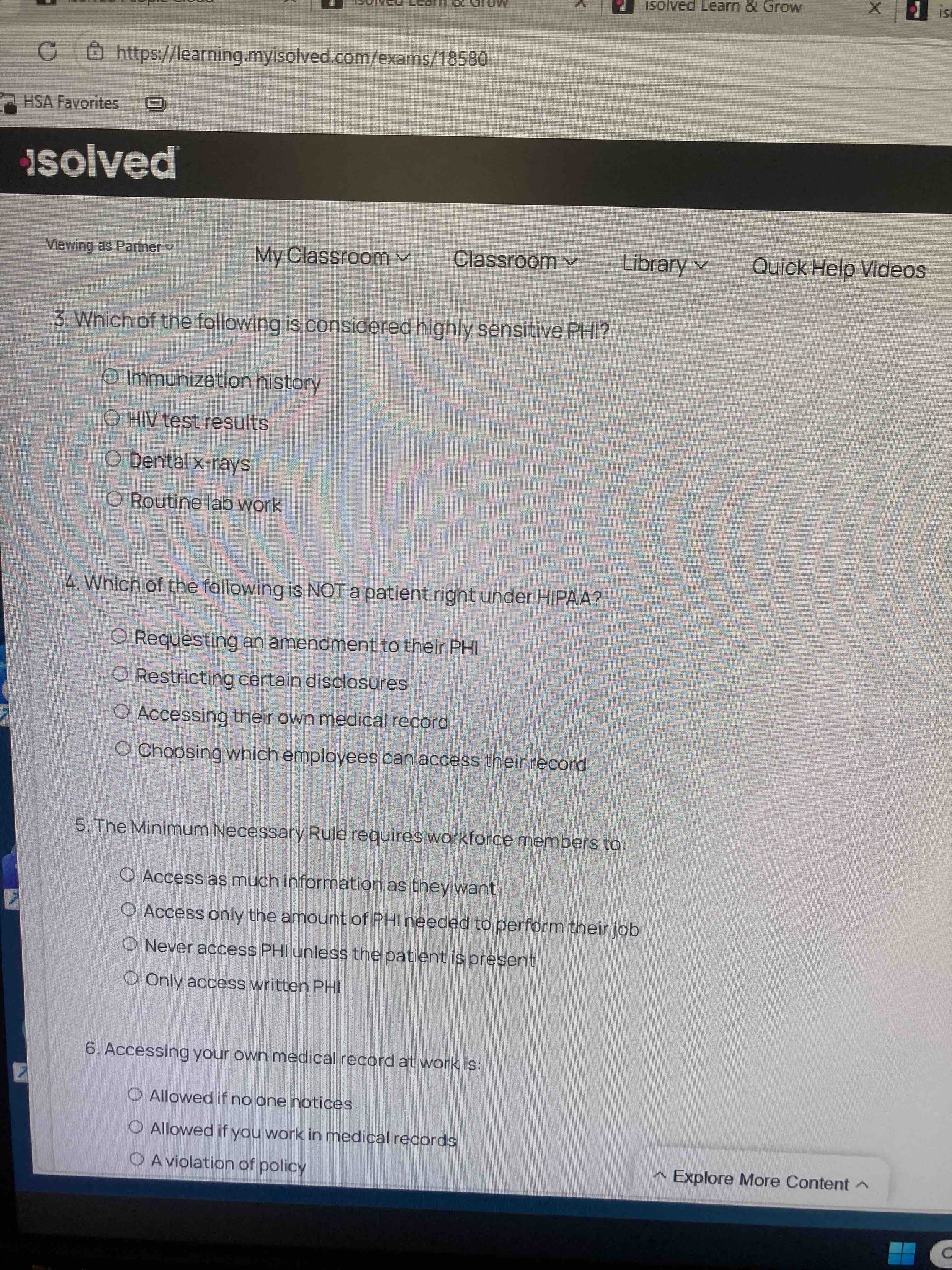
3. Which of the following is considered highly sensitive PHI? 4. Which of the following is NOT a patient right under HIPAA? 5. The Minimum Necessary Rule requires workforce members to: 6. Accessing your own medical record at work is:
Answer
For question 3, the correct answer is HIV test results, as certain health information like HIV status, mental health records, and substance abuse treatment records are considered highly sensitive and often require heightened protections beyond standard PHI. For question 4, the correct answer is Choosing which employees can access their record. Patients have the right to request amendments, restrict certain disclosures, and access their own medical records, but they do not choose specific internal employees for job-role access. For question 5, the correct answer is Access only the amount of PHI needed to perform their job, which reflects the core principle of the Minimum Necessary Rule. For question 6, the correct answer is A violation of policy, because employees generally cannot use their work access credentials to look up their own personal health information or that of family members unless through official patient portals.