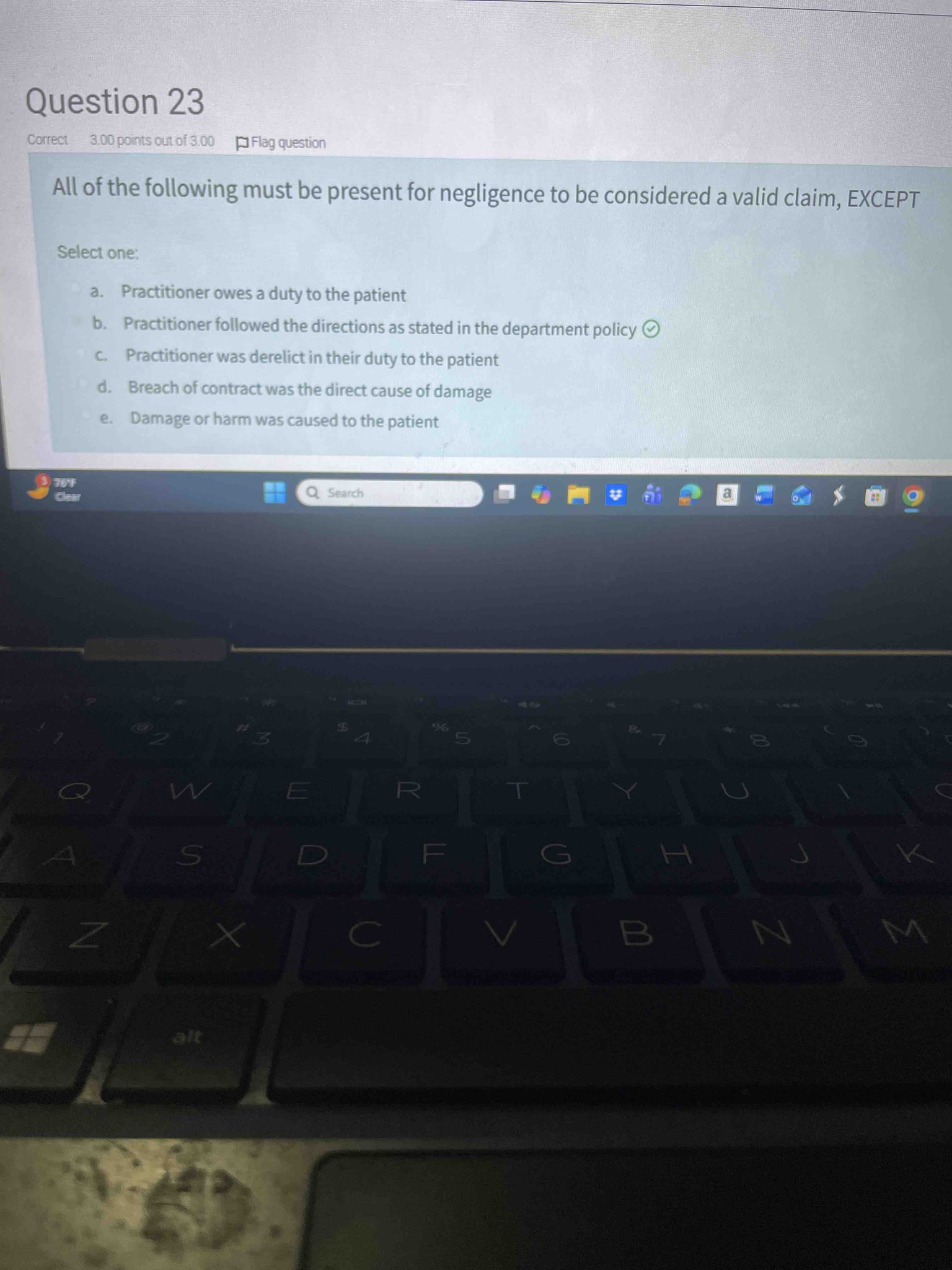
All of the following must be present for negligence to be considered a valid claim, EXCEPT: a. Practitioner owes a duty to the patient; b. Practitioner followed the directions as stated in the department policy; c. Practitioner was derelict in their duty to the patient; d. Breach of contract was the direct cause of damage; e. Damage or harm was caused to the patient
Answer
The correct answer is (b) 'Practitioner followed the directions as stated in the department policy'. In medical malpractice and general tort law, a valid claim of negligence typically requires four elements: 1. Duty: The practitioner owed a legal duty of care to the patient. 2. Dereliction/Breach: The practitioner failed to meet the standard of care (breached their duty). 3. Direct Cause (Proximate Cause): The breach of duty was the direct cause of the injury. 4. Damage: The patient suffered actual harm or injury. Option (b) describes a practitioner following proper procedure, which is the opposite of negligence. If a practitioner follows policy and meets the standard of care, they have not breached their duty, and a claim for negligence cannot be sustained. Note: While option (d) mentions 'breach of contract' instead of 'breach of duty', in some legal frameworks these are intertwined, but option (b) is the most definitive 'exception' because following protocol is a defense against negligence.