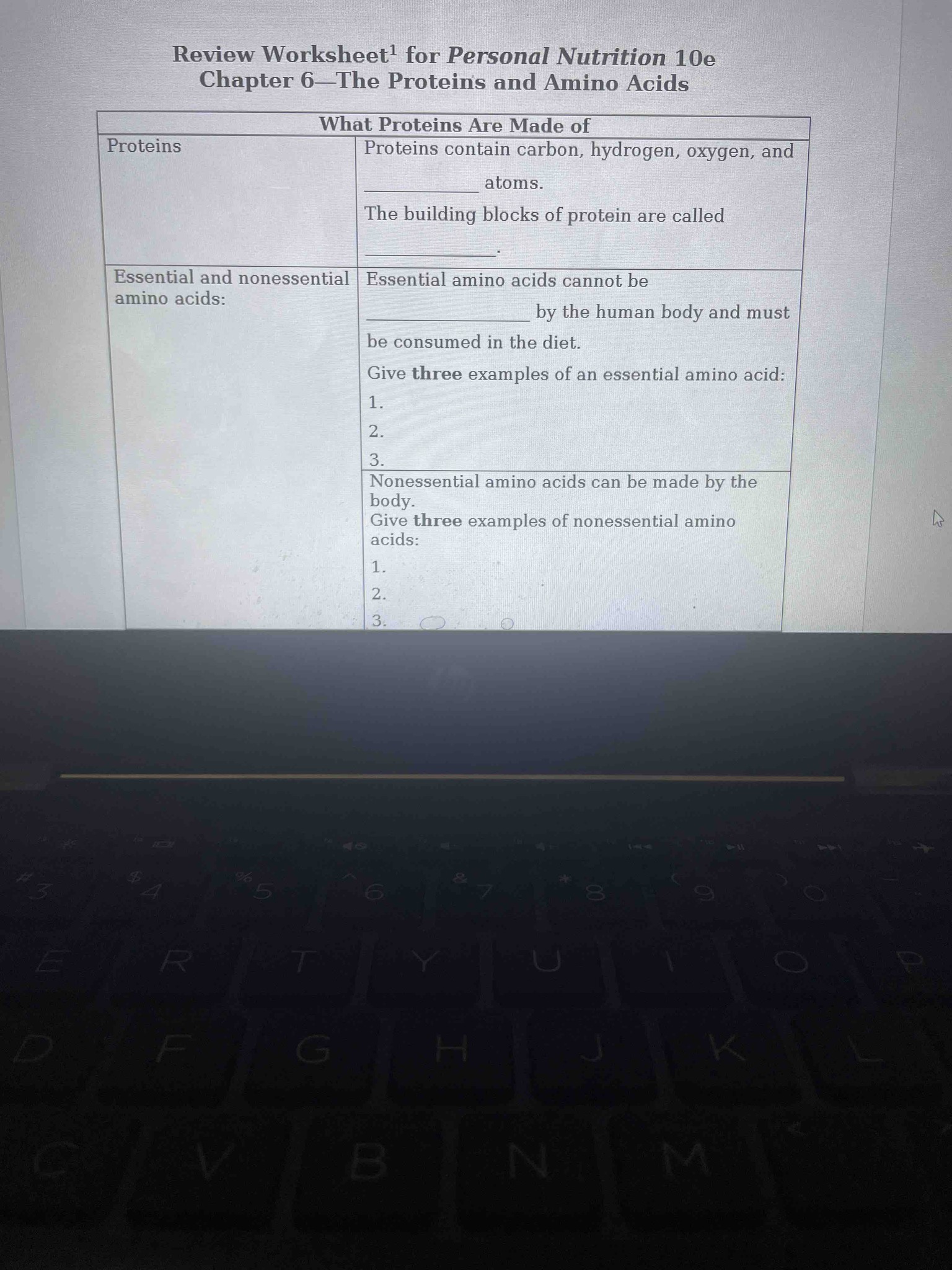
Fill in the blanks for the following nutrition worksheet regarding 'What Proteins Are Made of': 1. Proteins contain carbon, hydrogen, oxygen, and ______ atoms. 2. The building blocks of protein are called ______. 3. Essential amino acids cannot be ______ by the human body and must be consumed in the diet. 4. Give three examples of an essential amino acid: 1. ____ 2. ____ 3. ____ 5. Nonessential amino acids can be made by the body. Give three examples of nonessential amino acids: 1. ____ 2. ____ 3. ____
Answer
1. Nitrogen: Unlike carbohydrates and fats which only contain carbon, hydrogen, and oxygen, proteins are uniquely characterized by the presence of nitrogen (and sometimes sulfur) in their amino groups. 2. Amino acids: These are the chemical units that link together in long chains through peptide bonds to form protein molecules. 3. Synthesized (or made): Essential amino acids are 'essential' because the human body lacks the metabolic pathways to produce them at all or in sufficient quantities to meet physiological needs, making dietary intake mandatory. 4. Examples of essential amino acids include: 1. Histidine, 2. Isoleucine, 3. Leucine (others include Lysine, Methionine, Phenylalanine, Threonine, Tryptophan, and Valine). 5. Examples of nonessential amino acids include: 1. Alanine, 2. Arginine, 3. Asparagine (others include Aspartic acid, Cysteine, Glutamic acid, Glutamine, Glycine, Proline, Serine, and Tyrosine).