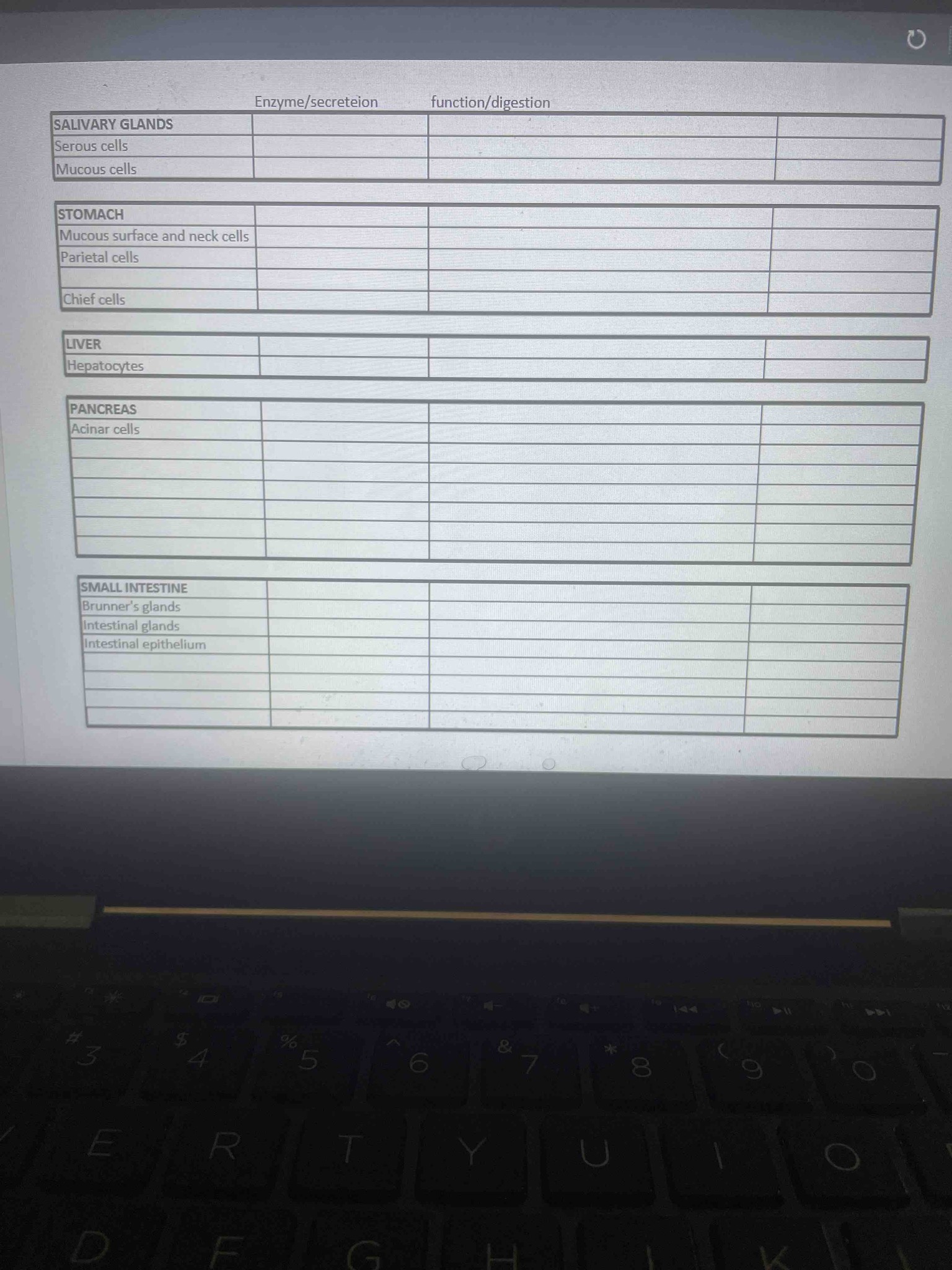
Fill in the table identifying the specific enzyme/secretion and its function/digestion role for each of the listed anatomical locations and cell types: Salivary Glands (serous cells, mucous cells), Stomach (mucous surface/neck cells, parietal cells, chief cells), Liver (hepatocytes), Pancreas (acinar cells), and Small Intestine (Brunner's glands, intestinal glands, intestinal epithelium).
Answer
The table for digestive secretions is filled as follows: 1. SALIVARY GLANDS: Serous cells secrete salivary amylase which initiates the breakdown of starch into maltose. Mucous cells secrete mucus which lubricates food for easier swallowing. 2. STOMACH: Mucous surface and neck cells secrete alkaline mucus that protects the stomach lining from its own acidic environment. Parietal cells secrete Hydrochloric Acid (HCl) which denatures proteins and activates pepsinogen, and Intrinsic Factor which is required for Vitamin B12 absorption. Chief cells secrete Pepsinogen (an inactive zymogen) which is converted by HCl to pepsin to digest proteins, and Gastric Lipase for fat digestion. 3. LIVER: Hepatocytes secrete Bile, which emulsifies fats, breaking large fat globules into smaller droplets to increase surface area for lipase action. 4. PANCREAS: Acinar cells secrete Pancreatic juice containing Pancreatic Amylase (carbohydrate digestion), Trypsin/Chymotrypsin/Carboxypeptidase (protein digestion), and Pancreatic Lipase (lipid digestion). 5. SMALL INTESTINE: Brunner's glands secrete alkaline mucus to neutralize acidic chyme from the stomach. Intestinal glands (Crypts of Lieberkuhn) secrete watery intestinal juice to facilitate absorption. Intestinal epithelium (brush border) contains enzymes like Enterokinase (activates trypsin), Maltase/Sucrase/Lactase (breaks down disaccharides), and Peptidases (breaks down peptides into amino acids).