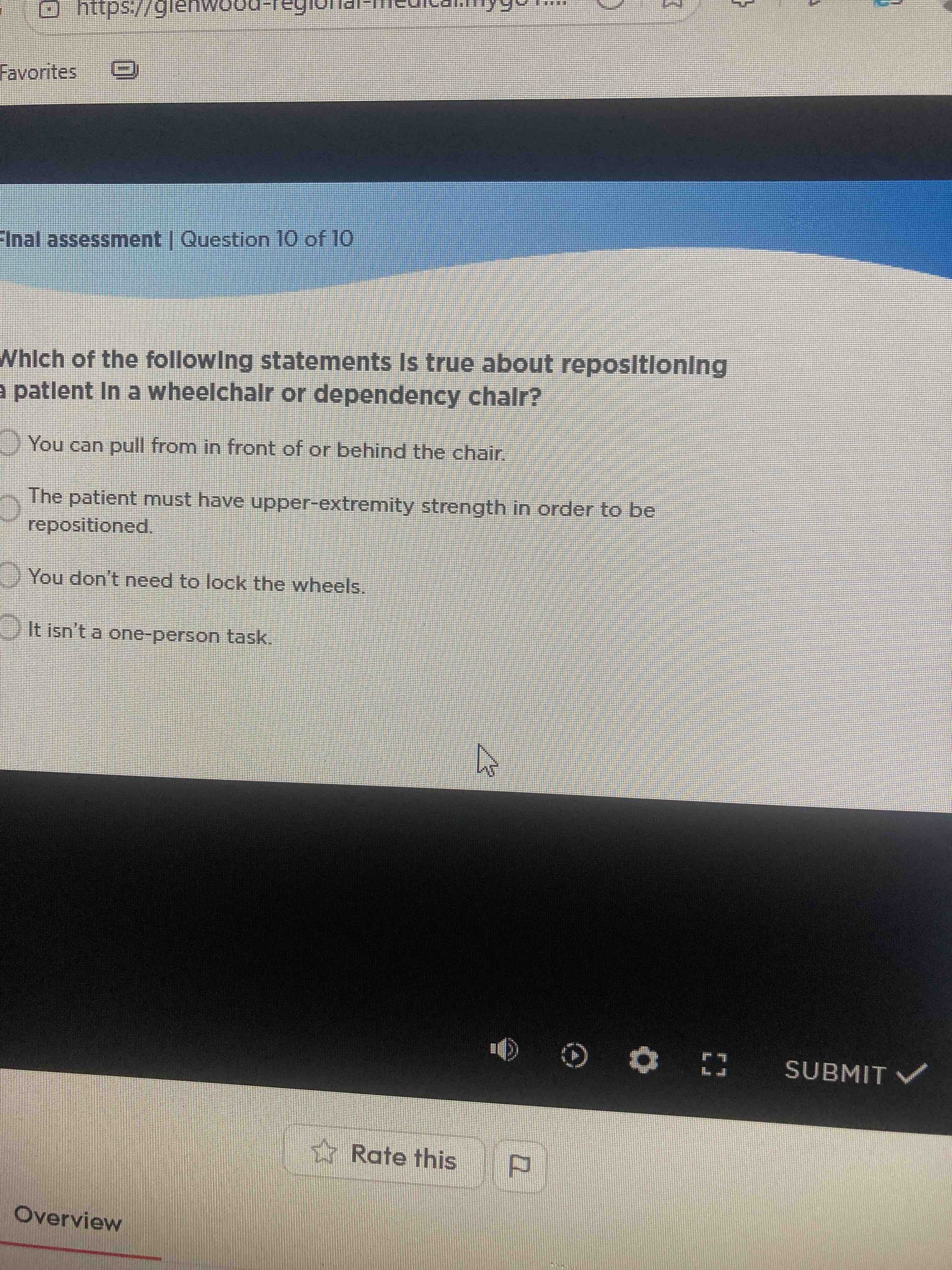
Which of the following statements is true about repositioning a patient in a wheelchair or dependency chair?
Answer
To answer this question, let's evaluate each statement based on standard patient safety and nursing transfer guidelines: 1. 'You can pull from in front of or behind the chair.' - False. Pulling a patient by their arms or shoulders can cause injury; staff should push or slide the patient correctly using assistive devices or proper ergonomics, avoiding pulling from the front in ways that strain joints. 2. 'The patient must have upper-extremity strength in order to be repositioned.' - False. Patients without upper-extremity strength can still be repositioned using specialized techniques, lifts, or multiple staff members. 3. 'You don't need to lock the wheels.' - False. Wheels must always be locked before attempting any transfer or repositioning to prevent the chair from rolling away and causing a fall. 4. 'It isn't a one-person task.' - True. Depending on the patient's mobility, weight, and the specific facility policies, repositioning in a wheelchair often requires assistance from more than one person to ensure safety and prevent injury to both the patient and healthcare staff.