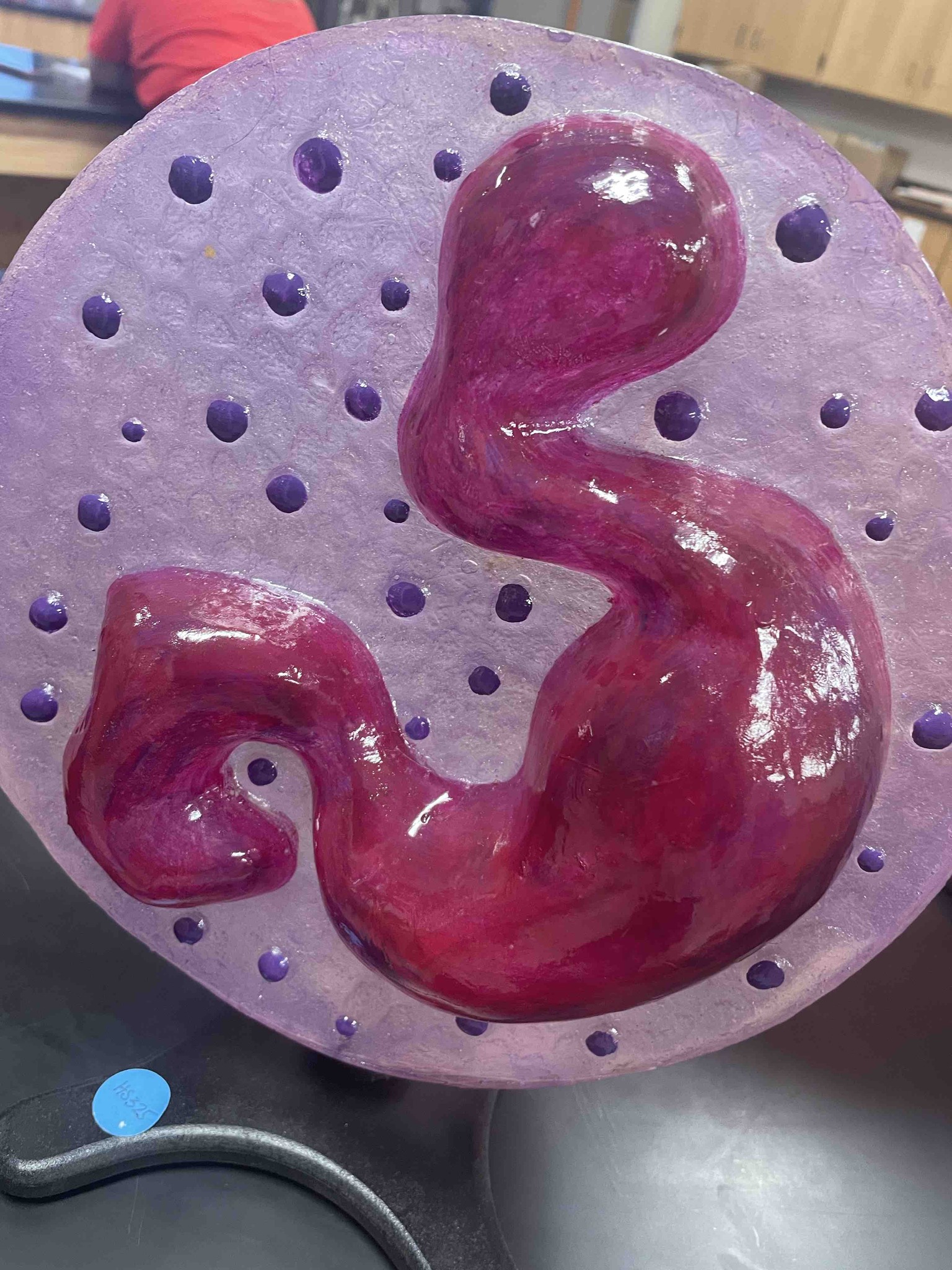
Identify the type of cell shown in this anatomical model and describe its characteristic features.
Answer
This model represents a neutrophil, which is the most abundant type of white blood cell (leukocyte) in the human body. Several key anatomical features allow for its identification: 1. Multi-lobed Nucleus: The large, dark-red/purple structure in the center represents a polymorphonuclear nucleus. Typically, neutrophils have nuclei with 3 to 5 distinct lobes connected by thin strands of chromatin, as seen in the model's twisted shape. 2. Cytoplasmic Granules: The smaller purple dots scattered throughout the light-purple background (cytoplasm) represent various types of granules. Neutrophils contain primary (azurophilic), secondary (specific), and tertiary granules that contain antimicrobial enzymes and substances used to destroy pathogens via phagocytosis. 3. Function: As a crucial part of the innate immune system, these cells migrate to sites of infection or inflammation to ingest and kill bacteria and fungi. Their characteristic 'segmented' appearance is why they are often referred to as 'segs'.