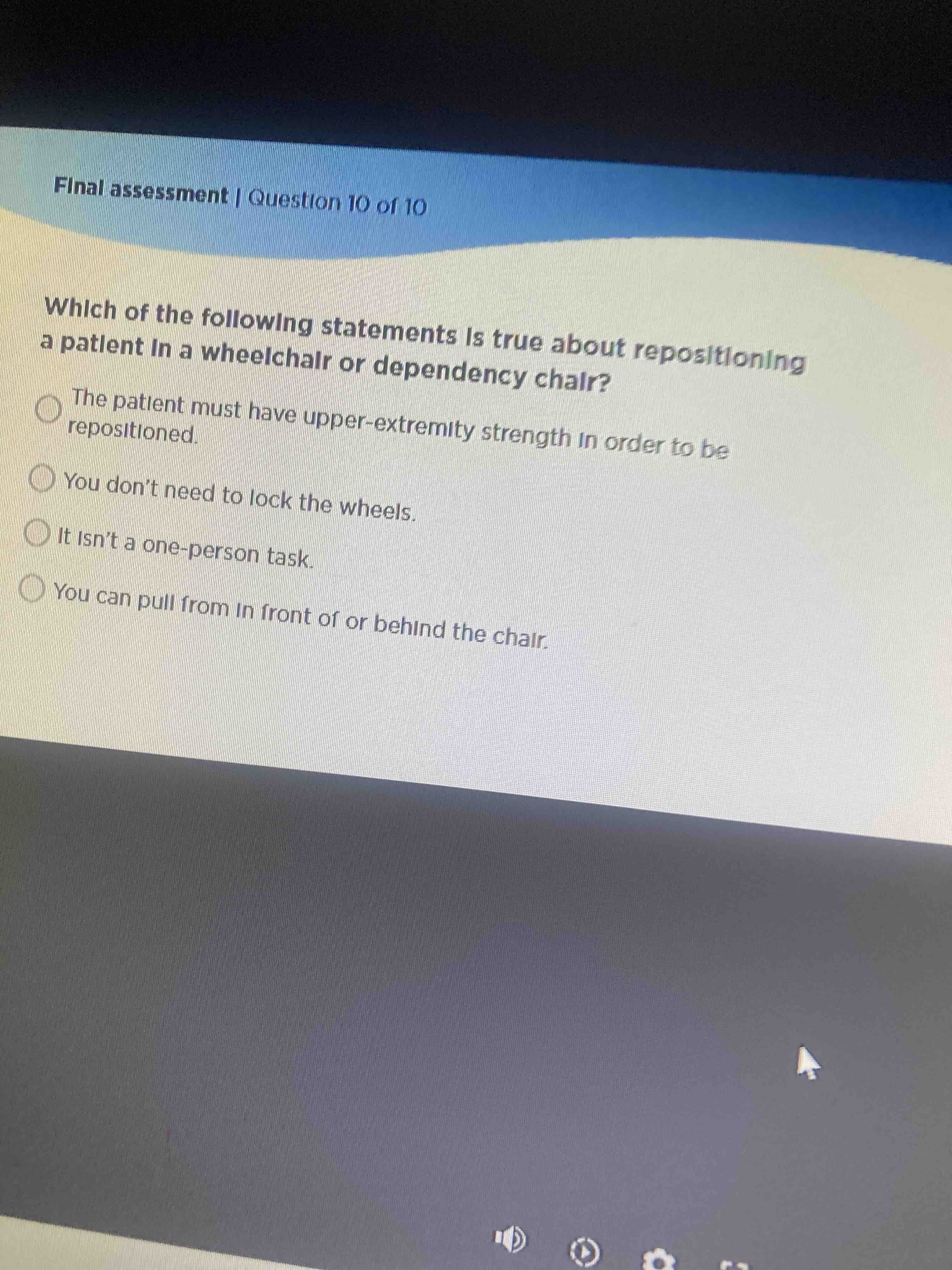
Which of the following statements is true about repositioning a patient in a wheelchair or dependency chair?
Answer
When repositioning a patient in a wheelchair or dependency chair, safety protocols dictate that the wheels must be locked to prevent the chair from rolling, making the statement 'You don't need to lock the wheels' false. The patient does not necessarily need upper-extremity strength, as caregivers can assist with the transfer or repositioning using proper body mechanics and equipment. Repositioning can often be performed safely by a single trained caregiver, making 'It isn't a one-person task' false depending on facility policy and patient needs. Finally, pulling from the front or behind can lead to strain or injury, so caregivers generally push or use proper transfer belts rather than pulling. Reviewing standard healthcare guidelines ensures patient safety during transfers and repositioning.