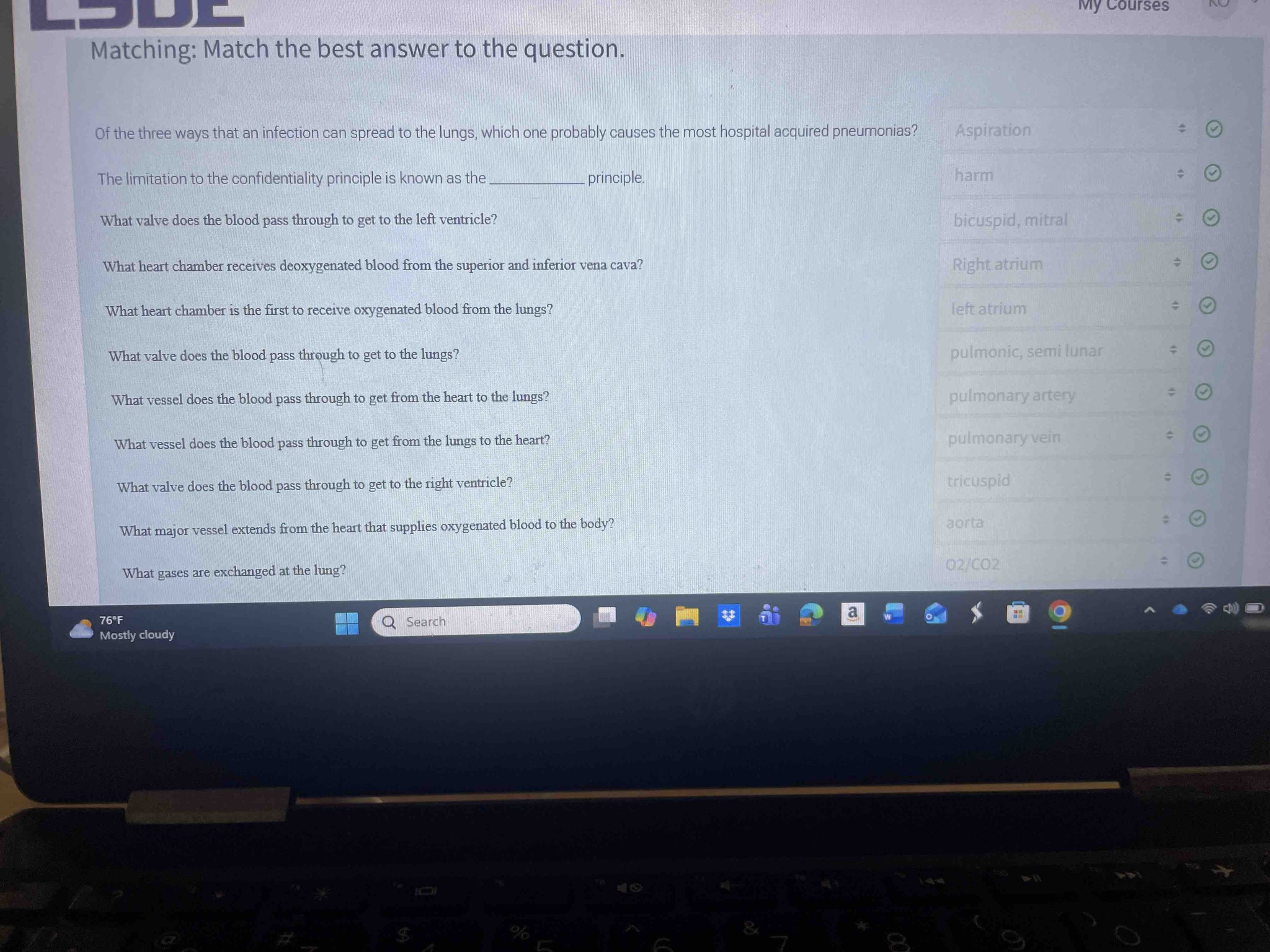
Matching: Match the best answer to the question. 1. Of the three ways that an infection can spread to the lungs, which one probably causes the most hospital acquired pneumonias? 2. The limitation to the confidentiality principle is known as the ___________ principle. 3. What valve does the blood pass through to get to the left ventricle? 4. What heart chamber receives deoxygenated blood from the superior and inferior vena cava? 5. What heart chamber is the first to receive oxygenated blood from the lungs? 6. What valve does the blood pass through to get to the lungs? 7. What vessel does the blood pass through to get from the heart to the lungs? 8. What vessel does the blood pass through to get from the lungs to the heart? 9. What valve does the blood pass through to get to the right ventricle? 10. What major vessel extends from the heart that supplies oxygenated blood to the body? 11. What gases are exchanged at the lung?
Answer
Here are the detailed matches and explanations for the anatomy and ethics questions provided: 1. Of the three ways that an infection can spread to the lungs, which one probably causes the most hospital acquired pneumonias? Answer: Aspiration. Aspiration of oropharyngeal secretions containing bacteria into the lower respiratory tract is the primary route for hospital-acquired pneumonia. 2. The limitation to the confidentiality principle is known as the ___________ principle. Answer: harm. The 'harm principle' allows for the breach of confidentiality when it is necessary to prevent serious harm to the patient or others. 3. What valve does the blood pass through to get to the left ventricle? Answer: bicuspid, mitral. Blood flows from the left atrium into the left ventricle through the mitral (or bicuspid) valve. 4. What heart chamber receives deoxygenated blood from the superior and inferior vena cava? Answer: Right atrium. The superior and inferior venae cavae are the large veins that return deoxygenated blood from the body to the right upper chamber of the heart. 5. What heart chamber is the first to receive oxygenated blood from the lungs? Answer: left atrium. Once oxygenated in the lungs, blood returns through the pulmonary veins to the left atrium. 6. What valve does the blood pass through to get to the lungs? Answer: pulmonic, semi lunar. To enter the pulmonary circulation, blood is pumped from the right ventricle through the pulmonary (pulmonic) semilunar valve into the pulmonary artery. 7. What vessel does the blood pass through to get from the heart to the lungs? Answer: pulmonary artery. The pulmonary artery is unique because it carries deoxygenated blood away from the heart to the lungs. 8. What vessel does the blood pass through to get from the lungs to the heart? Answer: pulmonary vein. The pulmonary veins carry oxygen-rich blood from the lungs back to the left atrium of the heart. 9. What valve does the blood pass through to get to the right ventricle? Answer: tricuspid. Blood enters the right ventricle from the right atrium through the tricuspid valve. 10. What major vessel extends from the heart that supplies oxygenated blood to the body? Answer: aorta. The aorta is the largest artery in the body; it exits the left ventricle to distribute oxygenated blood to all systemic tissues. 11. What gases are exchanged at the lung? Answer: O2/CO2. During respiration, oxygen (O2) is taken up by the blood and carbon dioxide (CO2) is released from the blood into the air sacs of the lungs.