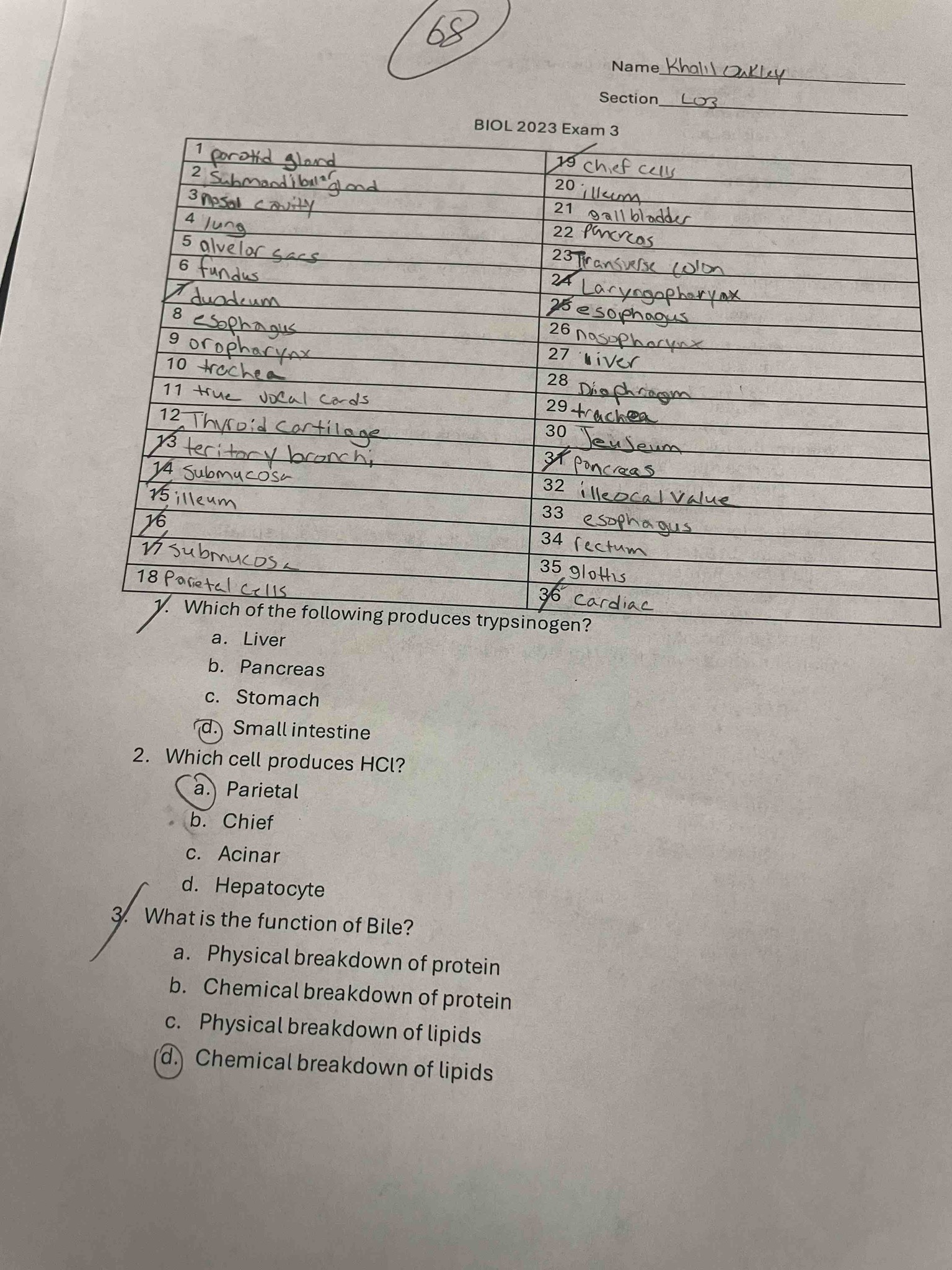
1. Which of the following produces trypsinogen? a. Liver, b. Pancreas, c. Stomach, d. Small intestine. 2. Which cell produces HCl? a. Parietal, b. Chief, c. Acinar, d. Hepatocyte. 3. What is the function of Bile? a. Physical breakdown of protein, b. Chemical breakdown of protein, c. Physical breakdown of lipids, d. Chemical breakdown of lipids.
Answer
1. The correct answer is (b) Pancreas. Trypsinogen is an inactive enzyme (zymogen) produced and secreted by the exocrine cells of the pancreas. It is later activated into trypsin in the small intestine. 2. The correct answer is (a) Parietal. Parietal cells, located in the gastric glands of the stomach lining, are responsible for secreting hydrochloric acid (HCl), which creates the acidic environment necessary for protein digestion. 3. The correct answer is (c) Physical breakdown of lipids. Bile, produced by the liver and stored in the gallbladder, acts as an emulsifier. It performs the physical breakdown of large fat globules into smaller droplets (micelles), which increases the surface area for digestive enzymes to act upon. It does not chemically break down the lipids themselves.