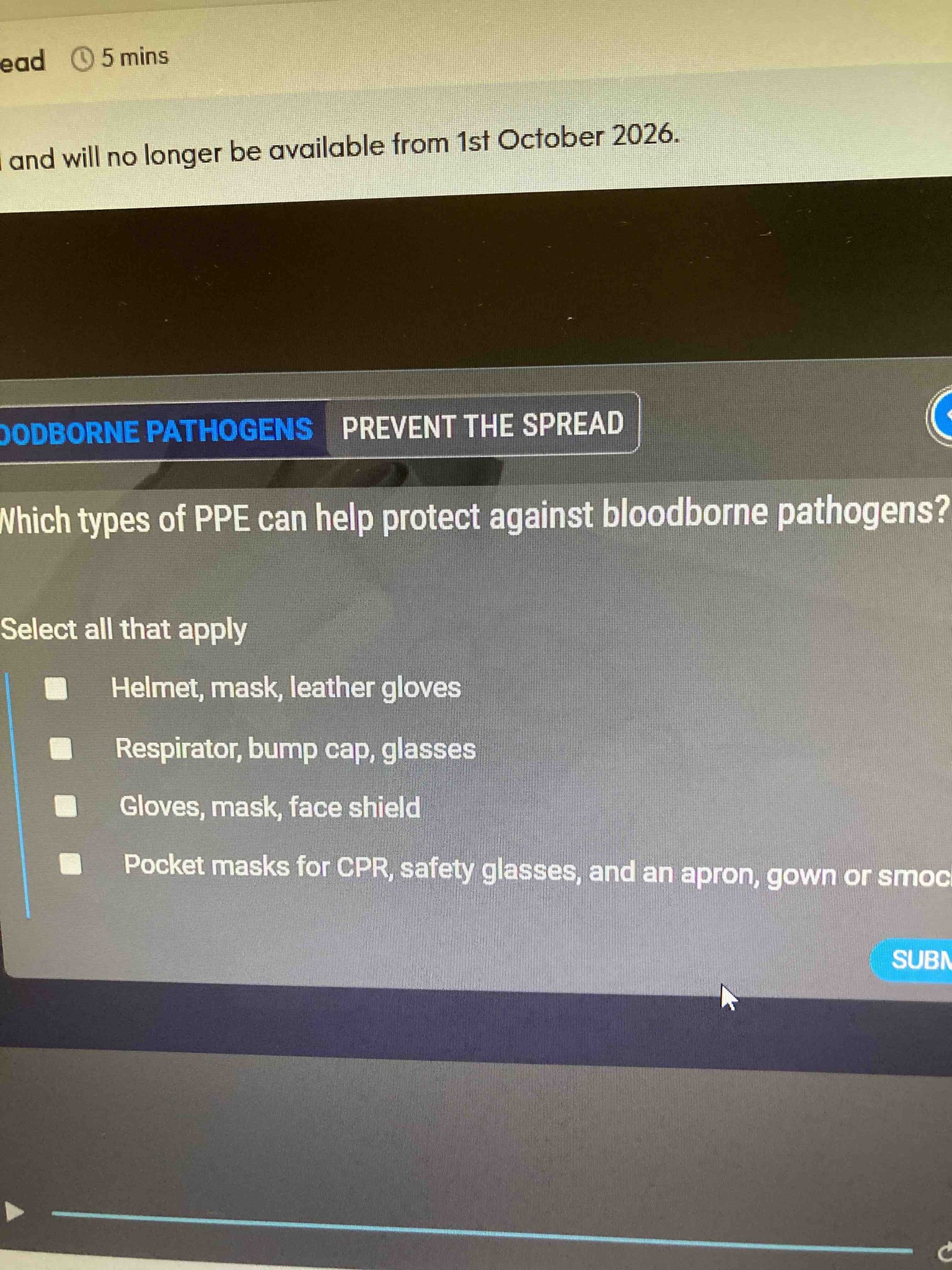
Which types of PPE can help protect against bloodborne pathogens? Select all that apply
Answer
Personal Protective Equipment (PPE) used to protect against bloodborne pathogens is designed to prevent infectious materials from reaching an employee's work clothes, street clothes, undergarments, skin, eyes, mouth, or other mucous membranes. Let us evaluate the options: 1. Helmet, mask, leather gloves - Leather gloves are porous and do not provide an effective barrier against liquids and pathogens. 2. Respirator, bump cap, glasses - Bump caps and certain respirators are primarily for physical head and particulate/airborne protection, not bloodborne exposure specifically in standard contexts. 3. Gloves, mask, face shield - These are standard barrier items used to protect hands and the face/mucous membranes from splashes of blood or other potentially infectious materials. 4. Pocket masks for CPR, safety glasses, and an apron, gown or smock - These items directly protect against splashes and bodily fluids during resuscitation and clinical or cleaning tasks. Therefore, the correct choices that apply are 'Gloves, mask, face shield' and 'Pocket masks for CPR, safety glasses, and an apron, gown or smock'.