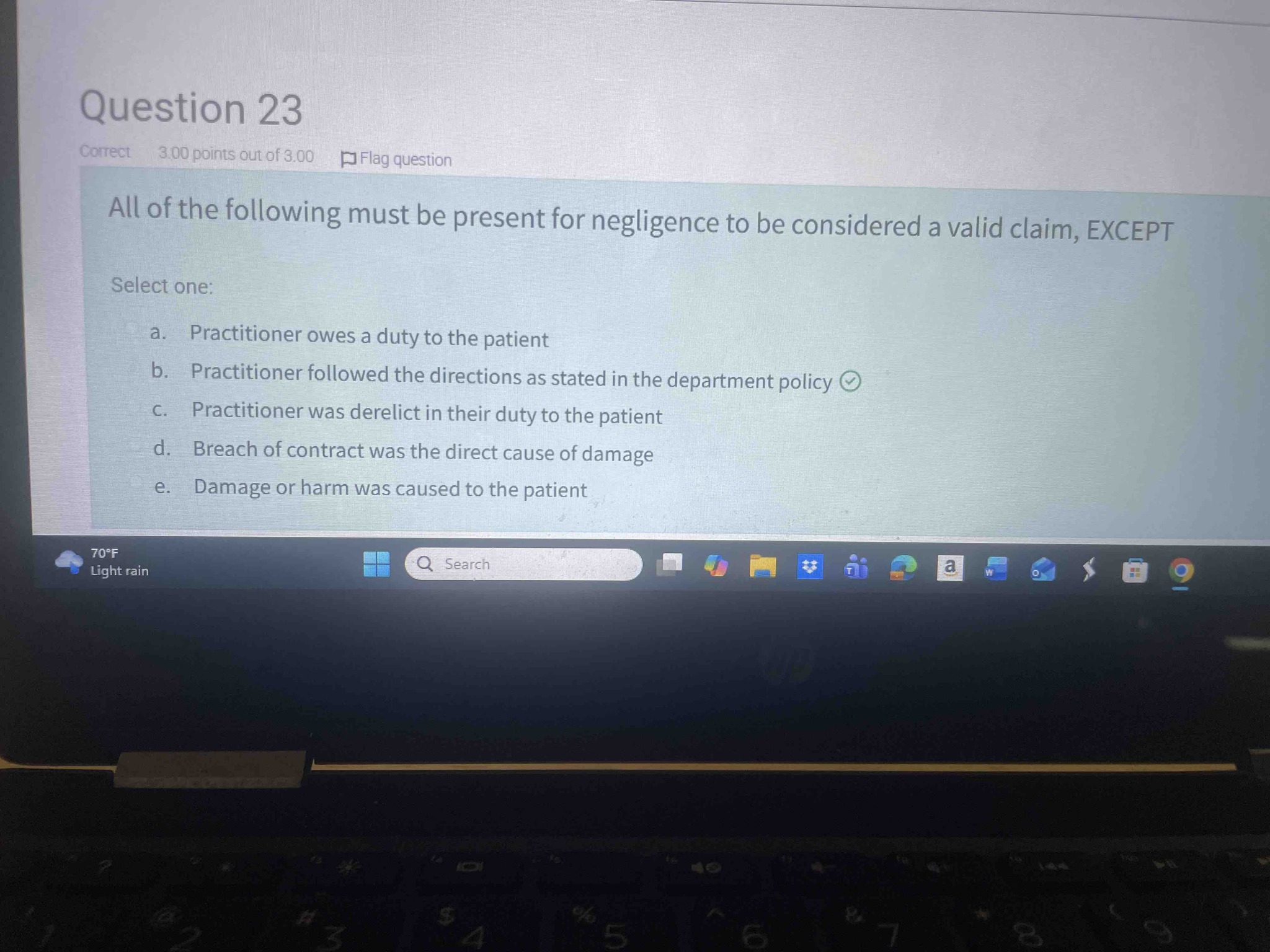
Question 23: All of the following must be present for negligence to be considered a valid claim, EXCEPT Select one: a. Practitioner owes a duty to the patient b. Practitioner followed the directions as stated in the department policy c. Practitioner was derelict in their duty to the patient d. Breach of contract was the direct cause of damage e. Damage or harm was caused to the patient
Answer
The correct answer is (b) 'Practitioner followed the directions as stated in the department policy'. To establish a valid legal claim of medical negligence (malpractice), four specific elements must be proven: 1) Duty (the practitioner owed a duty of care to the patient), 2) Dereliction/Breach (the practitioner failed to meet the standard of care), 3) Causation (the breach of duty led directly to the injury), and 4) Damage (actual harm occurred to the patient). Options (a), (c), (d), and (e) relate to these core elements. Specifically, (a) is 'Duty', (c) is 'Dereliction', (d) is 'Causation', and (e) is 'Damage'. Therefore, option (b) is the exception because if a practitioner strictly followed department policies and established standards of care, they have fulfilled their duty and cannot be considered negligent. Following correct procedure is a defense against a negligence claim, not a requirement for one.