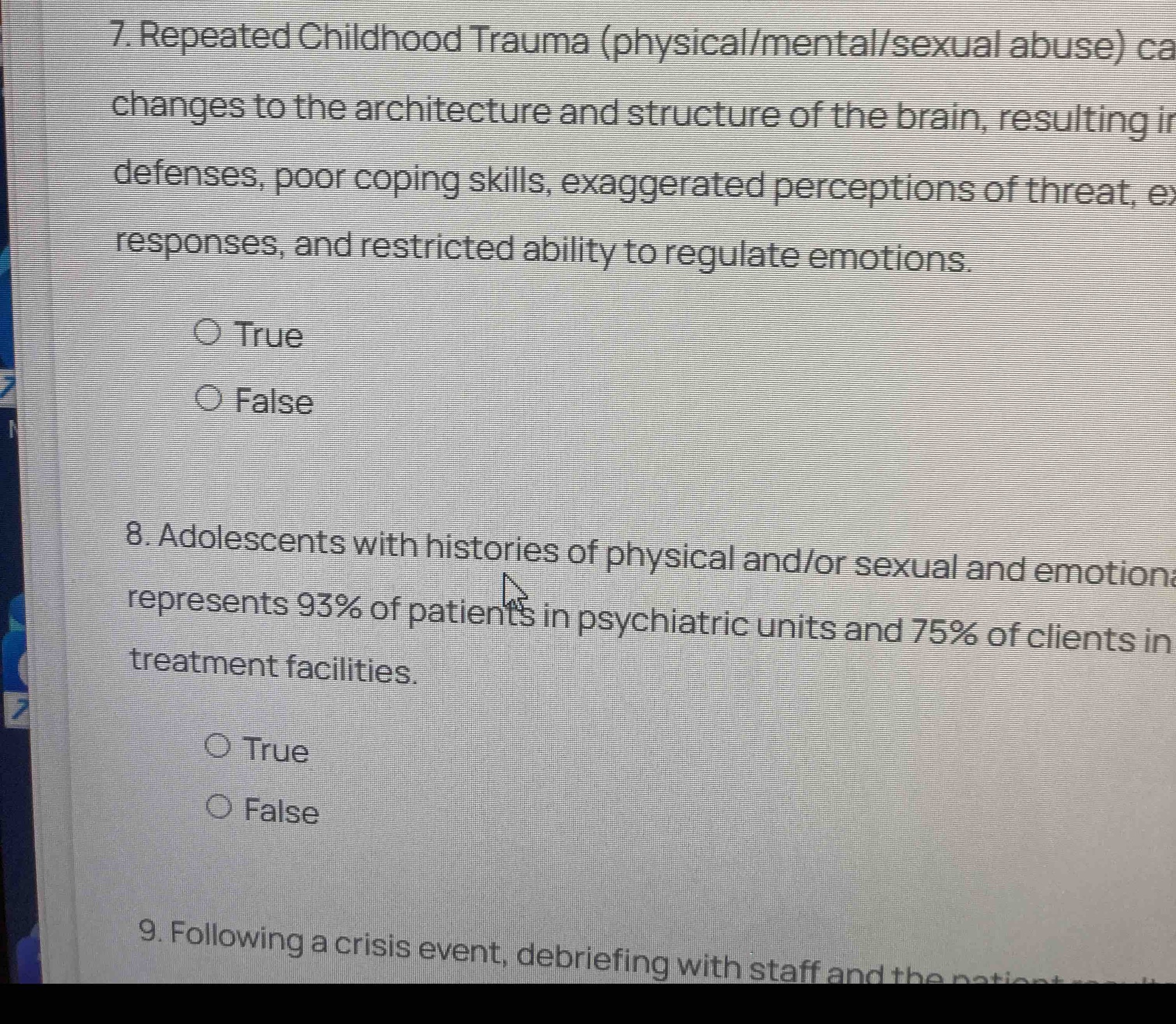
7. Repeated Childhood Trauma (physical/mental/sexual abuse) can cause changes to the architecture and structure of the brain, resulting in rigid defenses, poor coping skills, exaggerated perceptions of threat, exaggerated responses, and restricted ability to regulate emotions. True or False? 8. Adolescents with histories of physical and/or sexual and emotional abuse represents 93% of patients in psychiatric units and 75% of clients in treatment facilities. True or False?
Answer
For question 7, the correct answer is True. Extensive neuroscientific research demonstrates that repeated chronic trauma during childhood significantly impacts brain development, particularly structures like the amygdala, hippocampus, and prefrontal cortex, leading to the behavioral and emotional challenges described. For question 8, the correct answer is True. Studies in adolescent mental health and trauma-informed care (such as those cited by the National Association of State Mental Health Program Directors, NASMHPD) have frequently reported high prevalence rates showing that the vast majority of adolescents in psychiatric inpatient units and residential treatment facilities have histories of severe physical, sexual, and/or emotional abuse.