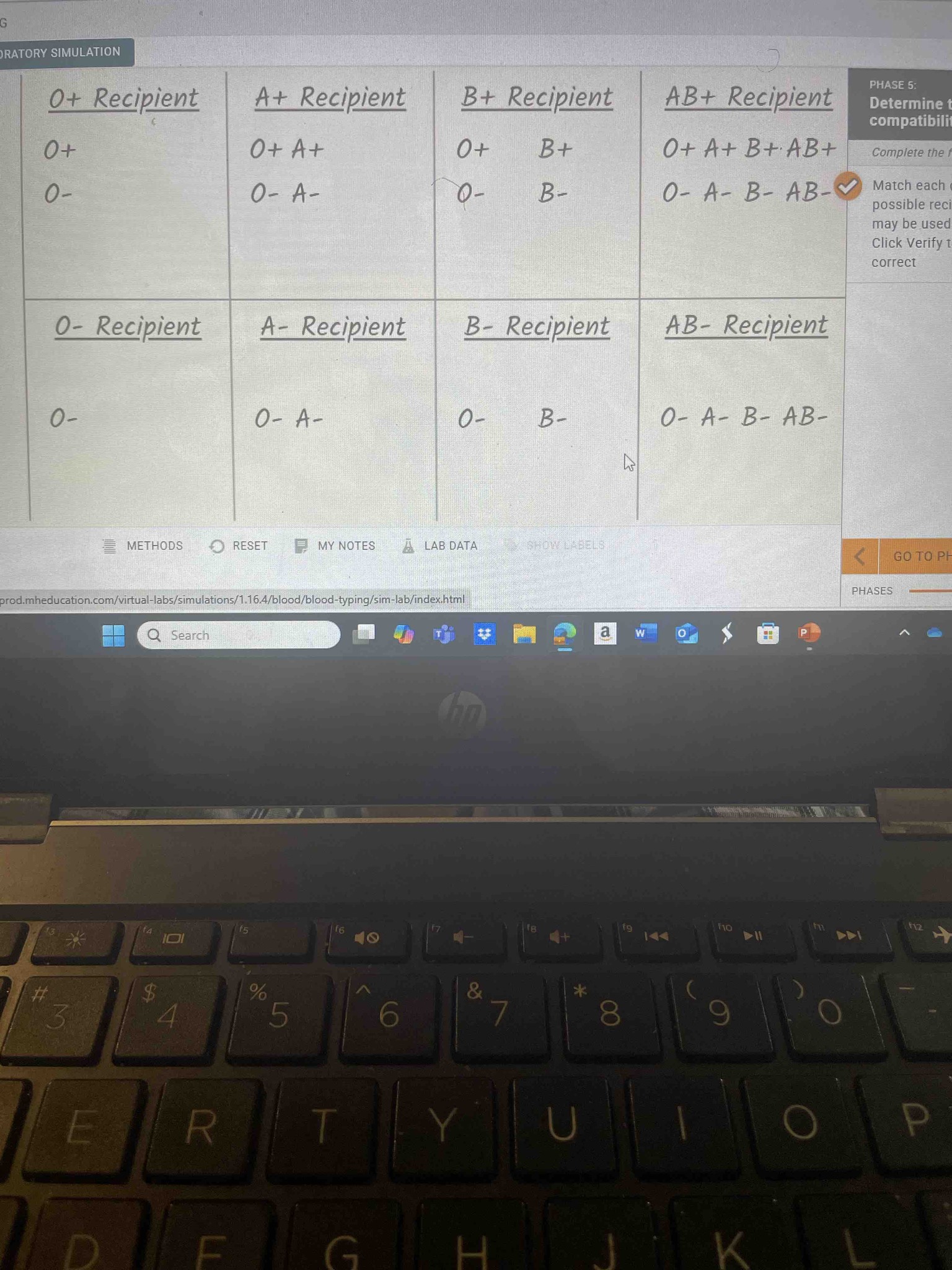
Phase 5: Determine blood compatibility. Match each donor blood type to the possible recipient blood types for the following categories: O+ Recipient, A+ Recipient, B+ Recipient, AB+ Recipient, O- Recipient, A- Recipient, B- Recipient, and AB- Recipient.
Answer
The solution is based on the compatibility of ABO and Rh blood groups. A recipient can receive blood that does not contain antigens foreign to their own immune system. 1. O+ Recipient: Can receive O+ and O-. O blood has no A or B antigens, and while they have the Rh antigen (+), they can receive Rh- blood. 2. A+ Recipient: Can receive O+, A+, O-, and A-. They have A antigens, so they cannot receive B, but can receive A or the universal donor O. 3. B+ Recipient: Can receive O+, B+, O-, and B-. They have B antigens and can receive B or O donor types. 4. AB+ Recipient: Can receive O+, A+, B+, AB+, O-, A-, B-, and AB-. This is the "universal recipient" because they have both A and B antigens and the Rh factor, meaning no donor type is foreign. 5. O- Recipient: Can only receive O-. They lack A, B, and Rh antigens, so any blood with those antigens will cause a reaction. 6. A- Recipient: Can receive O- and A-. They lack the Rh factor, so they can only receive from Rh- donors. 7. B- Recipient: Can receive O- and B-. Similar to A-, they can only receive negative Rh types because they lack the Rh antigen. 8. AB- Recipient: Can receive O-, A-, B-, and AB-. They can accept any ABO type as long as it is Rh-.